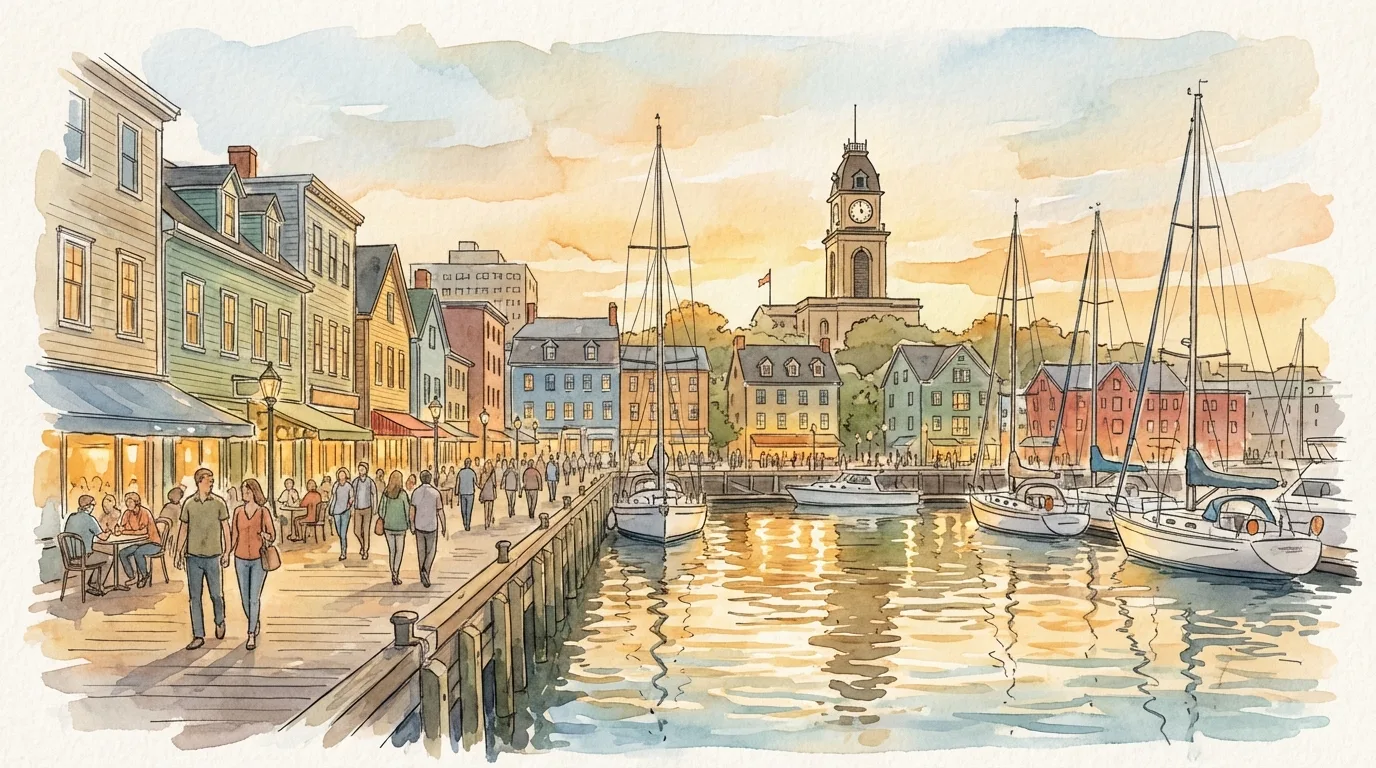
The shift to remote work has permanently changed where Canadians can live and work, and Nova Scotia is one of the biggest beneficiaries. More people are discovering that you do not need to pay Toronto or Vancouver rent to earn a Toronto or Vancouver salary. You just need reliable internet, a comfortable workspace, and a place to set up your laptop. Nova Scotia provides all three — plus an ocean, a thriving food scene, and a pace of life that leaves room for actually living.
This guide covers the practical details: internet speeds (actual numbers, not marketing claims), coworking spaces with real prices, monthly rental rates, time zone logistics, and immigration considerations for non-Canadians. If you have been thinking about trying Nova Scotia as a remote work base, here is everything you need to know before booking.
Stay with Casa Scotia
Where to stay near Halifax

Oceanview Modern Home
Halifax
Sleeps 8 · 4 bedrooms
See dates & prices
Bright & Cozy Cottage
Dartmouth
Sleeps 8 · 4 bedrooms
NS registration STR2627A9724
See dates & prices
Boutique Townhouse
Halifax
Sleeps 6 · 3 bedrooms
NS registration STR2627C9318
See dates & prices
Modern Suite
Halifax
Sleeps 6 · 3 bedrooms
NS registration STR2627B5302
See dates & prices
Oceanfront Serenity & Sauna
Halifax
Sleeps 6 · 3 bedrooms
NS registration STR2627A6021
See dates & prices
Oceanfront Getaway
Halifax
Sleeps 4 · 1 bedroom
See dates & prices
Heritage Apartment
Halifax
Sleeps 2 · 1 bedroom
NS registration STR2627C9318
See dates & pricesWhy Nova Scotia Works for Remote Workers
Time Zone Advantage
Nova Scotia runs on Atlantic Time (AST/ADT), which is one hour ahead of Eastern Time. This creates a surprisingly useful scheduling advantage:
- Toronto / New York: When it is 9am in Toronto, it is 10am in Halifax. You overlap with Eastern Time business hours almost entirely, with the bonus of starting and ending your workday an hour "earlier" in relative terms. A 5pm finish in Halifax is only 4pm in Toronto.
- London / Europe: Halifax is only 4 hours behind London (compared to 5 from Toronto). If your team spans North America and Europe, Nova Scotia puts you in a productive middle ground where you can attend a 9am Toronto standup and a 3pm London meeting on the same day without scheduling gymnastics.
- West Coast: Los Angeles and Vancouver are 4 hours behind Halifax. This is the one trade-off — late afternoon meetings on the West Coast mean evening calls for you. If most of your colleagues are Pacific Time, think carefully about this.
Cost of Living
The numbers speak for themselves. Here is how Halifax compares to other major Canadian cities:
- One-bedroom apartment: Halifax averages $1,600–$1,900/month compared to $2,400+ in Toronto and $2,800+ in Vancouver.
- Restaurant meal: A mid-range dinner for two in Halifax runs $70–$100, compared to $90–$130 in Toronto.
- Craft beer at a brewery: $7–$9 per pint in Halifax versus $9–$12 in Toronto or Vancouver.
- Groceries: Roughly 10–15% less than Toronto for most items, though seafood is significantly cheaper. Fresh lobster at the farmers' market: $12–$16/lb.
If your salary was set in a major city, your purchasing power increases meaningfully in Nova Scotia. The savings on rent alone can fund a significantly richer lifestyle — better food, more travel, or simply more money in savings.
Lifestyle
Within 20 minutes of downtown Halifax, you can be on a beach, hiking a coastal trail through old-growth forest at Point Pleasant Park, or kayaking in a quiet cove. The province has over 7,400 kilometres of coastline. Weekends genuinely feel like vacations. In summer, the days are long (nearly 16 hours of daylight in June) and the temperatures are comfortable (20–25°C). In fall, the foliage rivals New England. Even winter has its appeal — fewer extreme cold days than Ontario, and the snowfall creates a quiet beauty along the coast that inspires photographers and artists from around the world.
Internet: The Non-Negotiable (Real Numbers)
Let's address the first question every remote worker asks: is the internet actually good enough? Yes — with caveats depending on location.
Halifax and Urban Areas
Halifax has excellent internet infrastructure. Bell Fibe (fibre-to-the-home) is available in most Halifax, Dartmouth, and Bedford neighbourhoods, with speeds up to 1.5 Gbps download and 940 Mbps upload on their top-tier plans. A 500 Mbps plan (more than sufficient for any remote work scenario) typically costs $90–$110/month. Eastlink, a major regional ISP, offers cable internet up to 1 Gbps in urban areas. Several smaller ISPs (CityWide Communications, Purple Cow Internet) offer competitive plans on the Bell fibre network, often at lower prices.
For video calls, screen sharing, cloud-based development work, and uploading large files, you will have zero issues in Halifax, Dartmouth, or Bedford. The fibre infrastructure is genuinely excellent.
Rural and Coastal Areas
This is where you need to verify before booking. Nova Scotia's Internet for Nova Scotia Initiative has been a major government-funded project to bring high-speed internet to rural areas, and the majority of the province now has access to broadband. As of early 2026, approximately 99.9% of addresses are connected, with only about 690 remaining addresses still pending. However, "broadband" in rural areas can mean different things:
- Fibre (best): Some rural towns and communities now have fibre-to-the-home with speeds comparable to urban areas. Check with the specific property.
- Fixed wireless: Common in areas without fibre. Speeds typically 25–100 Mbps. Generally workable for video calls but can be affected by weather.
- Starlink satellite: Has become a reliable option in areas where traditional broadband falls short. Typical speeds of 50–200 Mbps with decent latency. Many vacation rental properties in rural coastal areas now include Starlink. Ask your host.
- DSL (avoid if possible): Some older rural connections still rely on DSL at 5–15 Mbps. This will not support serious video conferencing.
Bottom Line on Internet
Always confirm the internet speed and type before committing to an extended stay. Ask for an actual speed test result (a screenshot from speedtest.net), not just "high-speed internet." Here are the practical thresholds:
- 50 Mbps+ download with stable connection: Workable for most remote roles, including video calls.
- 100 Mbps+ download: Comfortable for heavy video conferencing, screen sharing, and file uploads simultaneously.
- 300 Mbps+ download: More than you need. Streaming 4K, running multiple devices, and video calling all at once — no issues.
Best Areas for Remote Workers
Halifax. The obvious choice for first-timers. You get the fastest and most reliable internet, walkable neighbourhoods with coffee shops and restaurants, coworking spaces when you want a change of scenery, and easy access to the airport for occasional travel. Neighbourhoods like the North End, South End, and downtown Dartmouth offer the best mix of affordability and lifestyle. If you need to be on video calls all day, Halifax is the safest bet for connectivity.
South Shore. Lunenburg, Chester, and Mahone Bay offer a coastal lifestyle that's hard to beat. You're trading some urban convenience for ocean views and a quieter pace. Internet availability varies by specific location — Chester and Lunenburg town centres have good broadband, while more remote waterfront properties may need Starlink. Best for workers with flexible schedules or those whose work is more asynchronous than meeting-heavy.
Annapolis Valley. Nova Scotia's wine country offers rolling farmland, vineyards, and a surprisingly mild microclimate. Wolfville is the hub — a university town with good internet, local restaurants, and a walkable main street. The valley appeals to remote workers who want a rural feel without being truly isolated. Wolfville to Halifax is about an hour's drive if you need to visit the city occasionally.
What to Look for in an Extended Stay Rental
A good extended stay rental is different from a good vacation rental. Here's what matters when you're working, not just visiting:
- Dedicated workspace: A desk and chair in a quiet room with a door you can close. Working from a kitchen table is fine for a week, but not for a month. Look for listings that specifically mention a home office or workspace.
- Reliable Wi-Fi (50+ Mbps): Ask for actual speed test results, not just "high-speed internet." You need enough bandwidth for video calls, screen sharing, and file uploads simultaneously.
- Comfortable desk and chair: Your back will thank you. An ergonomic office chair and a proper desk at the right height matter more than you think over a 30-day stay. If the rental doesn't have one, ask if they can add one before your arrival.
- In-unit laundry: Over a month-long stay, you'll need to do laundry regularly. In-unit washer and dryer should be non-negotiable for stays over two weeks.
- Full kitchen: Eating out for every meal gets expensive and unhealthy quickly. A fully equipped kitchen with a dishwasher, good cookware, and access to grocery stores lets you maintain a normal routine.
- Natural light: You'll be spending significant time indoors working. A bright space with good windows makes a real difference in mood and energy, especially during shorter fall and winter days.
Monthly Pricing and What to Expect
Extended stays are priced differently from nightly vacation rentals. Most property managers and hosts offer significant discounts for monthly bookings because longer stays mean less turnover, less cleaning, and more predictable income.
Typical monthly rates: Expect to pay $2,500-$5,000/month for a furnished rental in Nova Scotia, depending on size, location, and season. A one-bedroom in Halifax might run $2,500-$3,500/month. A waterfront two-bedroom on the South Shore could be $3,000-$4,500/month. Larger homes and peak summer months sit at the higher end.
Discount structure: Monthly rates typically represent a 30-50% discount compared to booking the same property at nightly rates. A property listed at $200/night ($6,000/month) might offer a monthly rate of $3,500-$4,000. The longer your stay, the better the rate — three-month bookings often come with additional discounts.
What's included: Most furnished extended stay rentals include utilities (electricity, heat, water), Wi-Fi, basic supplies (linens, towels, kitchen essentials), and regular maintenance. Confirm what's included before booking — some properties charge separately for electricity in winter months when heating costs are higher.
Coworking Spaces in Halifax
Working from a vacation rental is great most days, but sometimes you need a change of scenery, a more professional environment for a video meeting, or just the energy of other people working around you. Halifax has several coworking options:
- Volta (1505 Barrington Street, beside Halifax City Hall) — Halifax's main innovation and startup hub, located in a striking modern building on the waterfront. Volta offers three coworking membership tiers: Focus ($75/month) for hot-desk access during business hours, Virtual Office ($100/month) with a business address and mail handling, and Build ($275/month) for a dedicated desk with 24/7 access, 5 hours of meeting room time, and free coffee and tea. Day passes are available at $22.80 (tax included) for drop-in use. All memberships are month-to-month with no long-term contracts. The community includes startups, freelancers, and remote workers, and Volta hosts regular networking events and workshops.
- The Hub Halifax (1673 Barrington Street) — Flexible desk space in a heritage building downtown. A good option if Volta's tech-startup vibe is not your style. Monthly memberships and day passes available.
- Regus / IWG (multiple Halifax locations) — Traditional serviced office space with private offices and meeting rooms. More corporate, higher price point, but useful if you need a polished environment for client meetings.
- Coffee shop options: Several Halifax coffee shops are well-known as informal remote work spots with strong Wi-Fi, ample outlets, and tolerant staff. Anchored Coffee (Gottingen Street), Uncommon Grounds (South Park Street), and Trident Booksellers & Cafe (Hollis Street) are popular choices. Buy a coffee every couple of hours and you are welcome to stay.
- Halifax Central Library (5440 Spring Garden Road) — Free. Opened in 2014, this architecturally stunning building has multiple floors of quiet workspace, free high-speed Wi-Fi, meeting rooms (bookable for free), and a rooftop reading garden. Honestly, it is one of the best free workspaces in the city.
Practical Considerations
Health Insurance
If you are a resident of another Canadian province, your provincial health card may cover you for emergency and medically necessary services in Nova Scotia, but coverage varies by province and is often limited (for example, Ontario's OHIP provides very limited out-of-province coverage). Check with your home province's health ministry about specific out-of-province rules before you travel. For stays longer than a few months, private travel health insurance (typically $100–$200/month) is strongly recommended. If you are considering becoming a Nova Scotia resident, you can apply for MSI (Medical Services Insurance) after establishing residency, but there is typically a 3-month waiting period.
For Non-Canadians: Visa and Immigration
If you are not a Canadian citizen or permanent resident, working remotely from Nova Scotia while employed by a non-Canadian company is a grey area that depends on your visa status:
- Visitor visa / eTA (Electronic Travel Authorization): US citizens can enter Canada without a visa for stays up to 6 months. Citizens of most European and other countries need an eTA ($7 CAD). Under a visitor status, you are generally permitted to conduct remote work for a foreign employer (this was clarified by IRCC during the pandemic), as long as your work is directed at clients and customers outside Canada and your employer is outside Canada.
- Working Holiday visa (IEC): Citizens of countries with International Experience Canada agreements (UK, Australia, France, Germany, and many others) aged 18–35 can apply for an open work permit allowing them to work for any Canadian employer for 1–2 years.
- Digital Nomad considerations: Canada does not currently have a specific "digital nomad visa." However, the remote work provisions for visitors make it relatively straightforward for foreign remote workers to spend several months in Nova Scotia. Consult an immigration lawyer if your situation is complex.
Getting Around
Halifax has public transit (buses and the Dartmouth ferry, $2.75 per ride), but a car is practically essential if you want to explore beyond the city or if you are staying on the South Shore or in the Valley. Car rental rates for monthly bookings are often negotiable — ask about 30-day rates directly from the rental company (Enterprise and National tend to offer the best long-term rates in Halifax, typically $800–$1,200/month for a compact or mid-size vehicle). If you are staying three months or longer, buying a used vehicle and selling it when you leave may make more financial sense.
Tax Implications
If you are a Canadian resident staying in Nova Scotia for more than 30 days while working for an employer in another province, there may be tax implications. Provincial tax residency rules can be complex — Nova Scotia's provincial income tax rates are higher than Ontario's or Alberta's, and your employer may have payroll obligations in the province where you are physically working. Consult an accountant before committing to a long-term stay. This is genuinely not something to figure out after the fact, as corrections are expensive and stressful.
For non-Canadians working remotely for a foreign employer, you generally do not owe Canadian income tax on foreign-sourced income during a temporary stay, but tax treaties and individual circumstances vary. Seek professional advice.
Beyond Remote Work: Other Extended Stay Scenarios
Remote workers aren't the only people who need furnished monthly rentals. Nova Scotia sees steady demand for extended stays from several other groups:
- Insurance housing: Families displaced by fire, flood, or other home damage need a furnished home while repairs are completed. Insurance companies cover the cost, and stays typically last 1-6 months.
- Corporate relocation: Professionals transferring to Halifax for a new job need a place to stay while they search for a permanent home. A furnished rental gives them a comfortable base for 1-3 months.
- Seasonal living: Snowbirds in reverse — people from warmer climates who want to spend the Nova Scotia summer on the coast, or retirees testing out a new community before committing to a purchase.
- Medical stays: Patients and families who need to be near Halifax hospitals for extended treatment often need furnished accommodations outside of the hospital system.
Making the Move
The best way to test whether Nova Scotia works for you is to try it. A one-month extended stay gives you enough time to establish a routine, explore the area, and get a genuine feel for daily life — not just the vacation version. Many of our extended stay guests arrive planning to stay one month and end up extending to three or six. Some never leave.
The logistics are simpler than you might think. You need a furnished rental with good internet, a suitcase, and a laptop. Everything else — grocery stores, coffee shops, hiking trails, and the ocean — is already here waiting.
Every Casa Scotia home

The Oaks Seaside Retreat
Chester Basin · South Shore
Sleeps 10 · 5 bedrooms
Waterfront with a private dock and hot tub
See dates & prices
Schmidt Lake Mansion
Hammonds Plains · near Halifax
Sleeps 14 · 7 bedrooms
Lakefront with a pool and hot tub
NS registration STR2627A6739
See dates & prices
Oceanfront Sanctuary
Hubbards · St. Margarets Bay
Sleeps 8 · 4 bedrooms
Private oceanfront setting with a hot tub
NS registration STR2627B8450
See dates & prices
Chateau on Moody Lake
Williamswood · near Halifax
Sleeps 12 · 5 bedrooms
Lakefront on Moody Lake with a pool
NS registration STR2627A2260
See dates & prices
Serene Lakehouse
Hammonds Plains · near Halifax
Sleeps 12 · 5 bedrooms
Lakefront on a golf course
NS registration STR2627A8856
See dates & prices
Sea House at Whynachts Cove
Tantallon · St. Margarets Bay
Sleeps 6 · 3 bedrooms
Waterfront on Whynachts Cove
NS registration STR2627B2576
See dates & prices
Highland Retreat
Wolfville · Annapolis Valley
Sleeps 10 · 4 bedrooms
Large-group mansion with a pool
NS registration STR2627A4548
See dates & prices
Oceanview Modern Home
Halifax
Sleeps 8 · 4 bedrooms
Views on all three floors, central Halifax
See dates & prices
Lake-house at Fletchers Lake
Fall River · near Halifax
Sleeps 8 · 4 bedrooms
Lakefront on Fletchers Lake
NS registration STR2627A7330
See dates & prices
Bright & Cozy Cottage
Dartmouth
Sleeps 8 · 4 bedrooms
Central Dartmouth with a large backyard
NS registration STR2627A9724
See dates & prices
Spyglass Seastead
Chester Basin · South Shore
Sleeps 8 · 4 bedrooms
Circa-1890 farmhouse near Oak Island
NS registration STR2627D0280
See dates & prices
Oceanfront Home with Private Water Access
Head of St. Margarets Bay
Sleeps 8 · 4 bedrooms
Oceanfront with private water access
NS registration STR2627B3076
See dates & prices
Grand Lake Sunset Haven
Oakfield · near Halifax
Sleeps 8 · 4 bedrooms
On Grand Lake with lake views
NS registration STR2627A5649
See dates & prices
Boutique Townhouse
Halifax
Sleeps 6 · 3 bedrooms
Historic townhouse across from Government House
NS registration STR2627C9318
See dates & prices
Modern Suite
Halifax
Sleeps 6 · 3 bedrooms
Single-level home near the Halifax waterfront
NS registration STR2627B5302
See dates & prices
Oceanfront Serenity & Sauna
Halifax
Sleeps 6 · 3 bedrooms
Oceanfront home with an outdoor sauna
NS registration STR2627A6021
See dates & prices
Oceanfront Getaway
Halifax
Sleeps 4 · 1 bedroom
Oceanfront suite with sauna and paddleboards
See dates & prices
Heritage Apartment
Halifax
Sleeps 2 · 1 bedroom
Downtown heritage building, renovated
NS registration STR2627C9318
See dates & prices
Lakefront Luxury Retreat
Hammonds Plains · near Halifax
Sleeps 10 · 4 bedrooms
Lakefront with a heated pool and arcade
Ask about your dates
Heritage Estate 1893
Wolfville · Annapolis Valley
Sleeps 20 · 7 bedrooms
1893 former inn, walk to downtown Wolfville
NS registration STR2627T0915
Ask about your datesFind your Nova Scotia home
Real homes near Halifax, on the coast and in the Valley — booked direct, never priced above the platforms before tax.