Halifax is one of the most underrated cities in North America. The capital of Nova Scotia — population roughly 450,000 across the regional municipality — blends 275 years of maritime history with a food scene that has earned national attention, walkable streets built on dramatic harbour hills, and easy access to some of the most jaw-dropping coastline on the Atlantic seaboard. Whether you are visiting for a long weekend or using Halifax as a base camp for exploring the province, this guide covers everything you need to plan an unforgettable trip, with real names, real prices, and the kind of specific local knowledge you will not find in a generic travel brochure.
Stay with Casa Scotia
Where to stay near Halifax
Getting to Halifax
By Air
Halifax Stanfield International Airport (YHZ) is the main gateway to Atlantic Canada. Direct flights connect Halifax to Toronto (2 hours), Montreal (1.5 hours), New York-JFK and Newark (2.5 hours), Boston (2 hours), and seasonal routes to London Gatwick. WestJet, Air Canada, Porter Airlines, and several US carriers serve the airport year-round. YHZ sits about 35 kilometres north of downtown, and the drive takes roughly 30 minutes via Highway 102. Airport taxis charge a flat rate of approximately $63 to downtown Halifax. Rideshares (Uber operates in Halifax) are usually a few dollars less. All major car rental agencies — Enterprise, Hertz, National, Budget, and Avis — have desks at the terminal.
By Car
If you are driving from other parts of Eastern Canada or the US Northeast, here are the approximate distances to Halifax:
- Moncton, NB: 275 km (about 3 hours via the Trans-Canada)
- Charlottetown, PEI: 330 km (about 3.5 hours via the Confederation Bridge)
- Saint John, NB: 420 km (about 4.5 hours)
- Fredericton, NB: 460 km (about 5 hours)
- Montreal, QC: 1,270 km (about 13 hours)
- Toronto, ON: 1,780 km (about 18 hours)
- Boston, MA: 1,100 km (about 12 hours via I-95 and the Trans-Canada)
- Bar Harbor, ME (via CAT ferry to Yarmouth): Ferry crossing is about 3.5 hours, then 300 km to Halifax
The Trans-Canada Highway (Highway 104) is the main route into Nova Scotia from New Brunswick. The road is well maintained, and the drive through New Brunswick is scenic, particularly along the Tantramar Marshes near the provincial border. If you are coming from Maine, the CAT high-speed ferry runs seasonally between Bar Harbor and Yarmouth, NS — a scenic shortcut that shaves hours off the drive.
By Ferry
Beyond the CAT, Marine Atlantic operates year-round ferry service between North Sydney, Cape Breton and Port aux Basques, Newfoundland (about 7 hours) and a seasonal route to Argentia (about 14 hours). If your Nova Scotia trip is part of a larger Atlantic Canada itinerary, these ferries are worth knowing about.
Best Neighbourhoods to Stay
Halifax is a compact city, but your experience will vary significantly depending on where you base yourself. Here is a neighbourhood-by-neighbourhood breakdown to help you choose.
Downtown & the Waterfront
This is where most first-time visitors want to be, and for good reason. The Halifax Waterfront Boardwalk stretches for nearly four kilometres along the harbour, from the Canadian Museum of Immigration at Pier 21 in the south to the Casino Nova Scotia area in the north. Along the way you will pass the Maritime Museum of the Atlantic, Historic Properties (a cluster of restored 19th-century stone warehouses now housing shops and pubs), and dozens of restaurants with patio seating overlooking the water.
From the boardwalk, you can walk uphill to the Halifax Citadel in about 10 minutes, catch the Alderney ferry to Dartmouth (a 12-minute crossing that runs every 15 minutes during peak hours, $2.75 for adults), or wander through the boutiques and cafes of Spring Garden Road. Hotels downtown include the Westin Nova Scotian (from around $180/night off-peak to $350+ in peak summer), the Lord Nelson Hotel & Suites (from $170 to $310), and the Marriott Harbourfront (from $200 to $400). Accommodation here is pricier, but you are within walking distance of nearly everything.
The North End
Halifax's North End is the city's arts, culture, and craft-beer hub — and the neighbourhood where locals actually choose to spend their Saturday afternoons. Gottingen Street is the emerging arts corridor, lined with murals, galleries, vintage shops, and music venues. Agricola Street is packed with independent coffee shops (Anchored Coffee is a local favourite), bakeries (Julien's Patisserie in the Hydrostone Market does some of the best pastries in the Maritimes), and restaurants like Field Guide for seasonal, locally sourced small plates.
The Hydrostone area, near Young Street and Isleville Street, is a distinctive neighbourhood of tuff-stone row houses built after the devastating 1917 Halifax Explosion. Today it houses cafes, boutiques, and a Saturday morning vibe that feels worlds away from the tourist waterfront. The North End is also home to Good Robot Brewing Company (2736 Robie Street), whose quirky garden patio is one of the best summer hangouts in the city, and Unfiltered Brewing (1479 North Marginal Road) for serious hop heads.
This neighbourhood has a vibrant, local feel that makes it perfect for travellers who want to experience Halifax the way residents do. The Halifax Common — the oldest urban park in Canada, dating to 1763 — is here, and the beautiful Halifax Public Gardens (open 8am to sunset, free admission, guided tours daily at 10:30am, noon, 1:30pm, and 3pm from May through October) are just a short walk south.
The South End
Anchored by Dalhousie University and the University of King's College, the South End is leafy, residential, and home to some of Halifax's most beautiful Victorian-era architecture. Point Pleasant Park sits at the very tip of the peninsula — 75 hectares of old-growth forest trails, ruined fortifications, and rocky ocean shoreline. The South End is quieter than downtown or the North End but still walkable to most attractions. It is a particularly good choice for travellers who value a peaceful neighbourhood and do not mind a 15-to-20-minute walk to the waterfront.
Dartmouth (The Bright Side)
Dartmouth — locals call it "The Bright Side" — sits directly across the harbour from Halifax and is connected by the Alderney ferry (running since 1752, making it the oldest saltwater passenger ferry service in North America). Downtown Dartmouth has undergone a quiet renaissance in recent years, with excellent restaurants like The Canteen (Portland Street, known for its seafood and local wine list), craft breweries like Lake City Cider and New Scotland Brewing, and a farmers' market at Alderney Landing every Saturday from 8am to 1pm. Accommodation in Dartmouth is generally 15–25% less expensive than Halifax proper, and the ferry ride adds a scenic bonus to every day.
Bedford & Hammonds Plains (Lakefront Living)
If your trip is less about the city and more about relaxation, consider staying in the Bedford and Hammonds Plains area, about 20 minutes northwest of downtown. This region is known for its lakefront properties on lakes like Fletchers Lake, Kinsac Lake, and Lake Thomas. Many vacation rentals here come with private docks, kayaks, canoes, and swimming access directly from the property. Bedford also has all the amenities you need — grocery stores (Sobeys, Superstore), pharmacies, and restaurants along the Bedford Highway. It is an ideal base for families or groups who want the peace of a lakehouse retreat with the option of driving into Halifax for dinner or sightseeing.
Must-See Attractions
Halifax Citadel National Historic Site
The star-shaped fortress that sits on top of Citadel Hill is the most visited national historic site in Canada, and it deserves every bit of the attention. The current fortification was completed in 1856 — the fourth on this site — and it offers guided tours, the daily noon cannon firing (a Halifax tradition since the 1850s), a regimental army museum, and panoramic 360-degree views of the harbour, downtown, and George's Island. In summer, costumed interpreters from the 78th Highlanders and the Royal Artillery bring the Victorian-era garrison to life with musket drills and re-enactments.
Practical details: Open year-round. Summer hours (May–October) are 9am to 5pm daily. Admission is $11.70 for adults, $9.90 for seniors, and free for youth 17 and under. A Parks Canada Discovery Pass covers admission here plus other national parks and historic sites across the country. The grounds and ramparts are free to walk year-round, even when the interior exhibits are closed. Budget 1.5 to 2 hours for a thorough visit, and time your arrival for shortly before noon to watch the cannon firing from the ramparts.
Peggy's Cove
No trip to Halifax is complete without a visit to Peggy's Cove, located 43 kilometres southwest of the city along the winding, scenic Route 333 through St. Margarets Bay. The iconic lighthouse — actually a decommissioned post office — perches on massive smooth granite boulders sculpted by glaciers, with the open North Atlantic crashing below. It is one of the most photographed spots in Canada, and it earns every click.
The village itself is a working fishing community of roughly 30 permanent residents. The small harbour, filled with colourful lobster boats and stacked traps, is almost as photogenic as the lighthouse. Arrive before 9:30am or after 4pm to avoid the tour bus crowds that peak between 10am and 2pm. A visitor facility with parking ($5–$8 depending on season) opened in 2023, with a short shuttle to the village.
Safety warning: The dark, wet rocks near the waterline are genuinely dangerous. Rogue waves sweep people off these rocks every few years. Stay behind the marked safety barriers and off the black (wet) rock. This is not an exaggeration.
Maritime Museum of the Atlantic
Located on the waterfront at 1675 Lower Water Street, this is Nova Scotia's oldest and largest maritime museum. The permanent exhibits cover the Halifax Explosion of December 6, 1917 (when a munitions ship collision devastated the city's North End, killing nearly 2,000 people), the Titanic (Halifax was the base for the recovery operation, and 150 victims are buried in three Halifax cemeteries), and the Battle of the Atlantic convoys that departed from the harbour during World War II. The museum also displays a genuine piece of the Titanic's wooden grand staircase and the only intact deck chair recovered from the wreck.
Practical details: Open May through October: Monday and Wednesday–Friday 9:30am–4:30pm, Tuesday 9:30am–8pm (with free admission after 5pm on Tuesdays). Winter hours (November–April) are reduced. Summer admission is $9.45 for adults, $8.45 for seniors, $5.10 for youth 6–17, and free for children 5 and under. A family pass costs $24.55. Budget 1.5 to 2 hours, longer if you are a history enthusiast.
Alexander Keith's Brewery
Founded in 1820, Alexander Keith's is one of North America's oldest working breweries, and its brewery tour is unlike any other. Rather than the typical walk-and-taste format, Keith's puts on a theatrical experience: actors in period costume guide you through the history of Halifax's most famous India Pale Ale with songs, stories, and generous beer samples at several stops. The one-hour tour runs daily from June through October and on weekends the rest of the year.
Practical details: Located at 1496 Lower Water Street (in the historic Brewery Market building). Tours cost approximately $27 per person. Advance booking through the website is recommended in summer, as tours sell out regularly. The brewery is a 5-minute walk from the Maritime Museum along the boardwalk.
Canadian Museum of Immigration at Pier 21
Between 1928 and 1971, over one million immigrants entered Canada through this building. Today, Pier 21 is a national museum that tells their stories through personal accounts, interactive exhibits, and archival records. The research centre can help visitors trace their own family's immigration history through passenger manifests and ship records. It is a deeply moving experience, even for visitors with no personal connection to Canadian immigration.
Practical details: Located at 1055 Marginal Road, adjacent to the Halifax Seaport Farmers' Market. Admission is $14.50 for adults, free for youth 17 and under. Open year-round. Allow 1 to 1.5 hours.
Point Pleasant Park
At the southern tip of the Halifax peninsula, Point Pleasant Park covers 75 hectares (185 acres) of old-growth forest trails, ruined 18th-century fortifications, and rocky Atlantic shoreline. The park is free to enter and open from 6am to midnight. The perimeter trail is about 3.5 kilometres and takes 45 minutes to an hour at a leisurely pace. Along the way you will pass the Prince of Wales Martello Tower (built in 1796, one of the oldest in North America), the memorial to the sailors lost in the Battle of the Atlantic, and several beaches popular with dog walkers (off-leash before 10am and after 6pm).
Parking at the small lot on Point Pleasant Drive costs $2 per hour and is free after 6pm. On summer weekends, the lot fills early — park on nearby Tower Road or take the bus.
Art Gallery of Nova Scotia
The province's largest art museum, located at 1723 Hollis Street, houses over 19,000 works. The star attraction is the extensive collection of folk art by Maud Lewis, Nova Scotia's most beloved artist, including her famous painted house — the entire tiny dwelling, relocated from Marshalltown and reassembled inside the gallery. The gallery also features rotating contemporary Canadian and international exhibitions. Admission is $15 for adults, free for children under 5. Closed Mondays.
The Halifax Food Scene
Halifax punches far above its weight for a city of its size when it comes to food. The combination of world-class Atlantic seafood, a growing farm-to-table movement, and a competitive restaurant scene that keeps prices reasonable makes eating here one of the genuine highlights of any visit. Here are the places that matter.
Fine Dining & Special Occasion
- The Bicycle Thief (1475 Lower Water Street) — Right on the waterfront with a Mediterranean-Italian menu built around fresh pasta, seafood, and one of the best patios in the city. The rigatoni with braised short rib is legendary. Mains $26–$58. Reservations essential in summer.
- Gio (1725 Argyle Street) — Upscale Italian in a stylish Argyle Street setting, known for handmade pastas, an impressive wine list, and polished service. This is where locals go for anniversary dinners. Mains $28–$52.
- Edna (2053 Gottingen Street) — A North End gem with a French-inspired menu that changes with the seasons, sourcing almost exclusively from Nova Scotia farms and fishers. The intimate dining room seats about 40. Mains $28–$42. Reservations strongly recommended.
- Five Fishermen (1740 Argyle Street) — A Halifax institution for over 40 years, housed in a heritage building that once served as the temporary morgue after the Titanic disaster. Renowned for their seafood tower and lobster. Mains $32–$60.
Casual & Seafood
- The Waterfront Warehouse (1549 Lower Water Street) — Solid seafood chowder, fish and chips, and Maritime comfort food on the boardwalk. Patio tables with harbour views. Lunch $18–$30.
- The Canteen (Portland Street, Dartmouth) — A Dartmouth favourite with excellent fish tacos, local oysters, and a rotating daily catch. Worth the ferry ride.
- Salvatore's Pizzaiolo Trattoria (1541 Birmingham Street) — Wood-fired Neapolitan pizza that draws lines on weekend evenings. Pizzas $16–$22.
- John's Lunch (352 Pleasant Street, Dartmouth) — A legendary Dartmouth institution since 1969. The fish and chips and clam strips are simple, honest, and outstanding. Cash only. Expect a wait in summer.
Halifax Seaport Farmers' Market
Operating since 1750, the Halifax Seaport Farmers' Market is the oldest continuously running farmers' market in North America. The current building at 1209 Marginal Road on the waterfront is a modern, architecturally striking space with over 250 vendors on busy Saturdays. You will find fresh lobster (often $12–$16 per pound), artisan cheeses from Fox Hill Cheese House and That Dutchman's Farm, baked goods, local honey, smoked salmon, handmade crafts, and excellent prepared food stalls serving everything from Salvadoran pupusas to Nova Scotian seafood chowder.
Hours: The main market runs Saturdays 7am–3pm. A smaller Friday market operates 10am–4pm, and there is Sunday service 10am–3pm in peak season. Arrive before 9am on Saturdays to beat the crowds and get the best selection. Paid parking in the Seaport lots.
Craft Beer
Halifax has become one of the best craft beer cities in Atlantic Canada. Beyond Good Robot and Unfiltered in the North End, notable stops include Garrison Brewing (1149 Marginal Road, right beside the Seaport Market), Propeller Brewing (2015 Gottingen Street, one of the original Halifax craft breweries), and 2 Crows Brewing (1932 Brunswick Street) for experimental and barrel-aged brews. Most taprooms serve pints in the $7–$9 range and offer flights for around $12–$15.
The Donair: Halifax's Signature Street Food
You cannot write about Halifax food without mentioning the donair. This is not a doner kebab — Halifax made it their own. Spiced beef shaved off a vertical spit, wrapped in a soft pita, and topped with a sweet, garlicky condensed-milk sauce. It was officially designated Halifax's "national food" by city council in 2015. The top spots for a traditional donair include King of Donair (multiple locations), Randy's Pizza & Donair, and Jessy's Pizza. Best enjoyed late at night after a few pints on Argyle Street.
Day Trips from Halifax
Peggy's Cove (43 km, 45 minutes)
Already covered above in the attractions section, but worth emphasizing as a half-day trip. On the return drive, take the loop through the fishing villages of Indian Harbour and Hackett's Cove along Route 333 for a quieter, equally scenic coastal experience without the crowds. Stop at the Sou'Wester Restaurant in Peggy's Cove for seafood chowder before or after your lighthouse visit.
Lunenburg (100 km, about 1 hour)
The UNESCO World Heritage town of Lunenburg is one of the most beautiful small towns in Canada, and it justifies every superlative. Its colourful waterfront buildings — painted in the reds, blues, yellows, and greens that 18th-century shipbuilders used to identify their properties — have remained largely unchanged for over 250 years. Lunenburg is the home port of the Bluenose II, a replica of the famous racing schooner depicted on the Canadian dime. When in port, free deck tours are available — check the schedule online before you go.
The Fisheries Museum of the Atlantic (68 Bluenose Drive) is worth a stop: admission is $14 for adults, and exhibits cover the Grand Banks fishery, rum running, and the life of an Atlantic Canadian fishing family. For lunch, The Grand Banker Bar & Grill and Salt Shaker Deli (both on Montague Street) serve excellent seafood. This is an easy full-day trip from Halifax and pairs perfectly with Mahone Bay.
Mahone Bay (90 km, 50 minutes)
Just 15 minutes before you reach Lunenburg, the town of Mahone Bay is famous for its three churches, which sit side by side along the waterfront and are one of the most photographed views in the Maritimes. The town's main street is lined with artisan shops, galleries, and cafes. Amos Pewter offers free demonstrations of traditional pewter-casting. For lunch, try Mateus Bistro (533 Main Street) for locally sourced upscale-casual dining, or grab a pastry at Jo-Ann's Deli, Market & Bake Shop. Mahone Bay and Lunenburg make a perfect combined day trip.
Wolfville & the Annapolis Valley (100 km, 1 hour 15 minutes)
Nova Scotia's wine country runs through the Annapolis Valley, and the university town of Wolfville is its hub. Over a dozen wineries are clustered within a 20-minute drive, including Luckett Vineyards (famous for its red phone booth with a free call to anywhere in the world), Benjamin Bridge (whose sparkling wines have been compared to Champagne by international critics), and Lightfoot & Wolfville. Designate a driver or book a wine tour from Halifax ($120–$160 per person including tastings).
Getting Around Halifax
Walking
Downtown Halifax is one of the most walkable small cities in Canada. From the waterfront boardwalk to the Citadel is a 10-minute uphill walk. From the Citadel to the North End is another 15 minutes. Spring Garden Road, Argyle Street, the Public Gardens, and most major attractions are all within a 20-minute walk of each other. The city is hilly — you will definitely notice the slope from harbour to Citadel Hill — but the compact layout makes a car unnecessary for exploring the core.
Halifax Transit & the Dartmouth Ferry
The city bus system covers the Halifax Regional Municipality, including Dartmouth and Bedford. A single ride costs $2.75 for adults ($2.00 for youth 13–17 and seniors, free for children 12 and under). The Alderney ferry from downtown Halifax to Dartmouth is part of the transit system and runs every 15 minutes during peak hours, every 30 minutes off-peak. The 12-minute crossing is worth riding just for the harbour views — locals consider it the cheapest scenic boat tour in the city. Get a transfer when you board and use it for your return trip within 90 minutes. The Woodside ferry runs a similar schedule to a second Dartmouth terminal (weekdays only).
Car Rental
If you plan to take day trips to Peggy's Cove, Lunenburg, the Annapolis Valley, or anywhere beyond Halifax, a rental car is essential. All major agencies have desks at the airport and locations downtown. Expect to pay $50–$85 per day for a mid-size vehicle in summer. Traffic in Halifax is light by Canadian city standards, though expect some congestion during morning and evening rush hours on the approaches to the Macdonald Bridge (toll $1.25 cash, $1.00 MacPass) and MacKay Bridge connecting Halifax to Dartmouth.
Parking tip: Street parking downtown is metered ($2–$3 per hour) and free on Sundays and holidays. Several parkades near the waterfront charge $15–$22 per day. Most vacation rentals outside downtown include free driveway parking.
When to Visit
Halifax shines brightest from June through October. Summer (June to August) brings daytime highs of 20–25°C, outdoor festivals like the Royal Nova Scotia International Tattoo (late June/early July) and the Halifax Jazz Festival (July), and nearly 16 hours of daylight. Fall (September to October) delivers stunning foliage that peaks around mid-October, cooler temperatures perfect for hiking, and 10–20% lower accommodation prices. Winter is quiet and atmospheric — perfect for storm watching and cozy evenings — with rates 30–50% below summer peaks. For a deeper dive into seasonal planning, see our season-by-season guide to visiting Nova Scotia.
Where to Stay: Hotels vs. Vacation Rentals
Halifax has a solid range of hotels. The Westin Nova Scotian (a beautifully restored railway hotel near the waterfront) runs $180–$350+ per night depending on season. The Lord Nelson Hotel & Suites (overlooking the Public Gardens) averages $170–$310. The Marriott Harbourfront offers waterfront views from $200–$400. These are excellent options for solo travellers and couples.
For families or groups of four or more, a vacation rental offers significantly more space and value. A four-bedroom lakehouse in the Bedford area, for example, might sleep 8–10 guests with a full kitchen, in-unit laundry, private lake access, and outdoor space — far less per person than booking multiple hotel rooms. Cooking some meals at home with ingredients from the Seaport Farmers' Market or a local fish shop saves substantially on food costs. If you are travelling with children, the extra bedrooms, yard space, and flexibility of a rental can make the difference between a stressful trip and a relaxing one. For a detailed comparison, see our vacation rental vs. hotel guide.
Our homes in and near Halifax
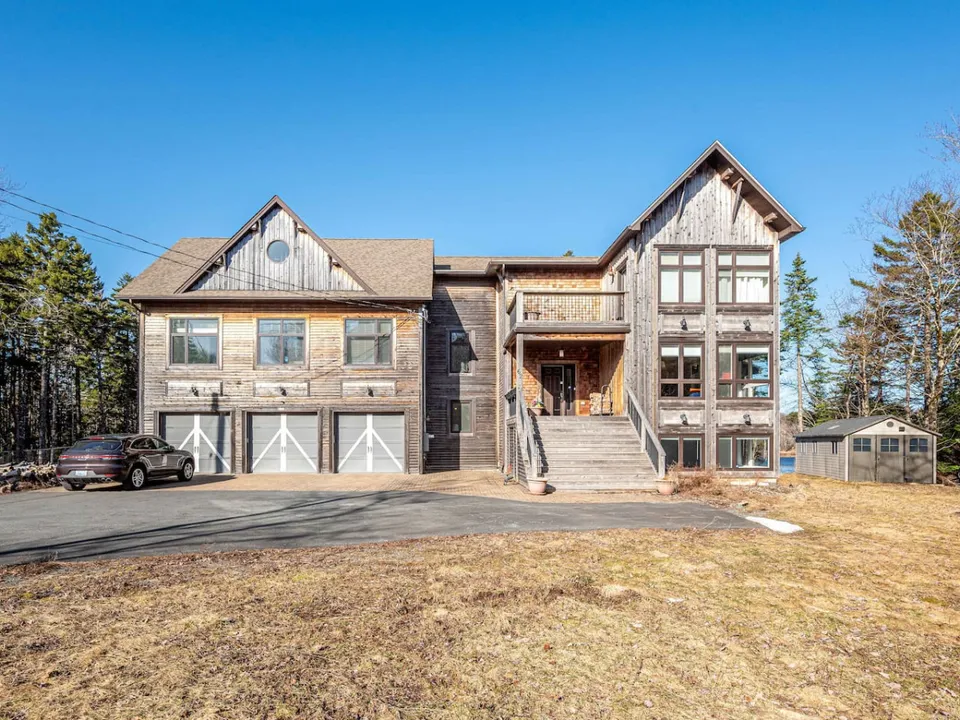
Schmidt Lake Mansion
Hammonds Plains · near Halifax
Sleeps 14 · 7 bedrooms
Lakefront with a pool and hot tub
NS registration STR2627A6739
See dates & prices
Chateau on Moody Lake
Williamswood · near Halifax
Sleeps 12 · 5 bedrooms
Lakefront on Moody Lake with a pool
NS registration STR2627A2260
See dates & prices
Serene Lakehouse
Hammonds Plains · near Halifax
Sleeps 12 · 5 bedrooms
Lakefront on a golf course
NS registration STR2627A8856
See dates & prices
Oceanview Modern Home
Halifax
Sleeps 8 · 4 bedrooms
Views on all three floors, central Halifax
See dates & prices
Lake-house at Fletchers Lake
Fall River · near Halifax
Sleeps 8 · 4 bedrooms
Lakefront on Fletchers Lake
NS registration STR2627A7330
See dates & prices
Bright & Cozy Cottage
Dartmouth
Sleeps 8 · 4 bedrooms
Central Dartmouth with a large backyard
NS registration STR2627A9724
See dates & prices
Grand Lake Sunset Haven
Oakfield · near Halifax
Sleeps 8 · 4 bedrooms
On Grand Lake with lake views
NS registration STR2627A5649
See dates & prices
Boutique Townhouse
Halifax
Sleeps 6 · 3 bedrooms
Historic townhouse across from Government House
NS registration STR2627C9318
See dates & prices
Modern Suite
Halifax
Sleeps 6 · 3 bedrooms
Single-level home near the Halifax waterfront
NS registration STR2627B5302
See dates & prices
Oceanfront Serenity & Sauna
Halifax
Sleeps 6 · 3 bedrooms
Oceanfront home with an outdoor sauna
NS registration STR2627A6021
See dates & prices
Oceanfront Getaway
Halifax
Sleeps 4 · 1 bedroom
Oceanfront suite with sauna and paddleboards
See dates & prices
Heritage Apartment
Halifax
Sleeps 2 · 1 bedroom
Downtown heritage building, renovated
NS registration STR2627C9318
See dates & prices
Lakefront Luxury Retreat
Hammonds Plains · near Halifax
Sleeps 10 · 4 bedrooms
Lakefront with a heated pool and arcade
Ask about your dates